Post
SharkBite Heavy Duty Hooks: Hooks That Won’t Bend, Break, or Rust
May
Introduction: Hooks That Won’t Bend, Break, or Rust
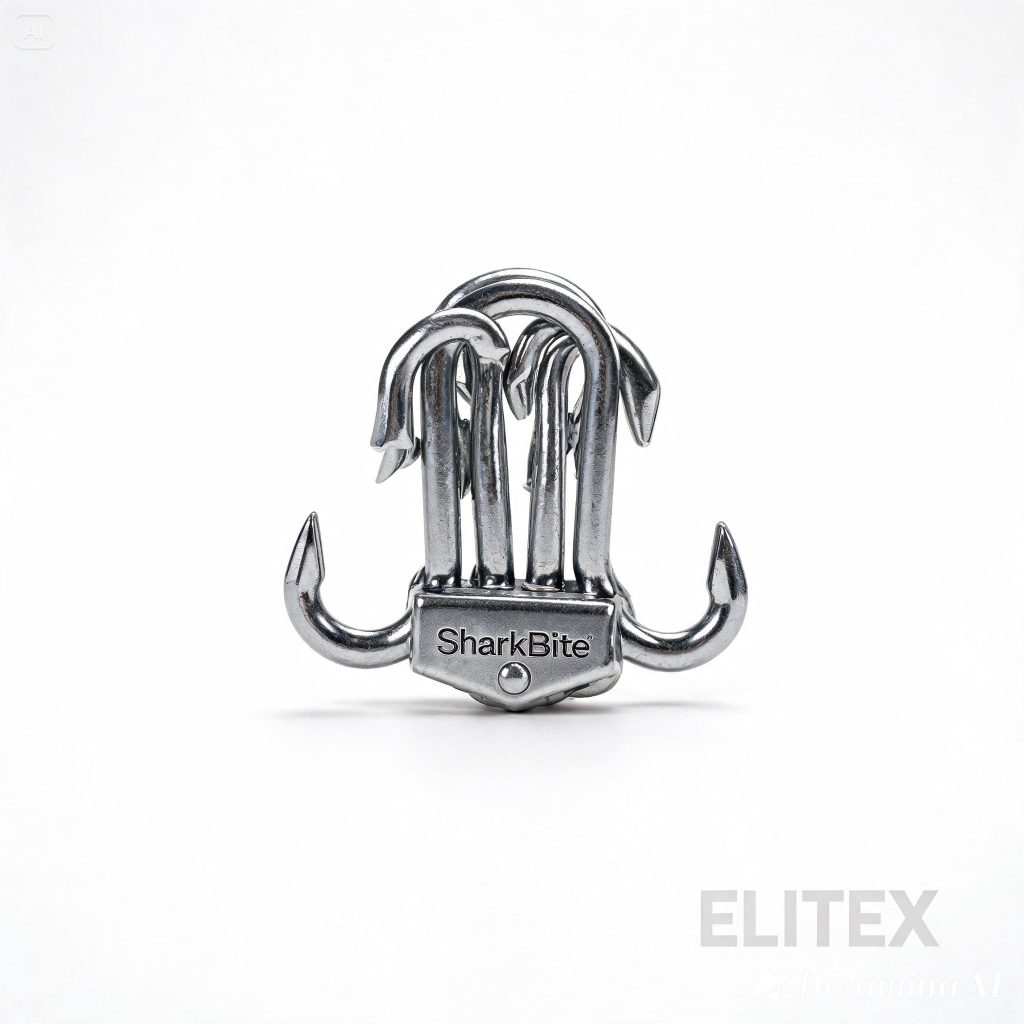
Few things are more devastating than losing the fish of a lifetime because your hook straightened or broke. You feel the heavy weight, the powerful head shakes, the line screaming off the reel – and then nothing. You reel in a bent hook and a broken heart. The SharkBite Heavy Duty Hooks are designed to prevent that heartbreak. Forged from high-carbon steel, chemically sharpened, and coated with black nickel for corrosion resistance, these hooks are built to handle the biggest, toothiest, most powerful fish in freshwater and inshore saltwater. Available in circle hooks, J-hooks, and treble hooks, SharkBite offers sizes from 2/0 to 12/0, with heavy wire construction that resists bending even under extreme load.
But are SharkBite hooks truly heavy-duty, or just marketing hype? This comprehensive review covers forging vs. stamping, steel quality, point sharpness and durability, corrosion resistance, and real-world testing on catfish, pike, muskie, and sharks. By the end, you will know why SharkBite hooks are the last word in terminal tackle strength.
Who Are SharkBite Heavy Duty Hooks For?
SharkBite hooks are designed for anglers who target large, powerful, or toothy fish. Specifically, they suit:
Catfish anglers targeting blue cats, flatheads, and channels over 20 lbs. Muskie and pike hunters who need hooks that withstand violent head shakes and teeth. Shark fishermen (inshore) targeting blacktip, spinner, and small bull sharks. Sturgeon anglers who need extreme strength for these prehistoric giants. Saltwater inshore anglers targeting bull reds, tarpon, and large snook. Big game freshwater anglers chasing trophy bass, pike, or lake trout. Any angler who has lost a big fish to a failed hook and vowed “never again.”
These hooks are not for finesse fishing, small panfish, or trout. They are overkill for bass under 5 lbs. For trophy hunters, however, SharkBite hooks are essential insurance.
Hook Styles and Sizes
The SharkBite Heavy Duty collection includes three hook styles, each designed for specific techniques.
Circle hooks (sizes 4/0 to 10/0): Forged, offset point, black nickel finish. Circle hooks are designed for live or cut bait fishing. When a fish takes the bait, the hook slides out of the mouth and catches the corner of the jaw – resulting in fewer gut-hooked fish and easier releases. The offset point increases hookup ratio without reducing the circle hook’s self-setting action. Sizes: 4/0 (catfish to 20 lbs), 6/0 (catfish to 40 lbs, redfish), 8/0 (large catfish, small sharks, tarpon), 10/0 (large sharks, sturgeon).
J-hooks (sizes 2/0 to 8/0): Forged, straight shank, kirbed point (offset to one side). Traditional J-hooks for cut bait, live bait, or lures. The kirbed point improves hookup ratio. The forged shank resists straightening. Sizes: 2/0 (bass, walleye), 4/0 (catfish, pike), 6/0 (large catfish, muskie), 8/0 (big pike, sharks).
Treble hooks (sizes 5/0 to 12/0): Forged, heavy wire, black nickel. For replacing hooks on large muskie lures, big crankbaits, or as stinger hooks. Sizes: 5/0 (large muskie baits), 8/0 (giant swimbait hooks), 12/0 (large shark or tuna lures).
Each package contains 10 hooks. The hooks are individually carded to prevent point damage during storage.
Forging vs. Stamping: Why It Matters
The single most important difference between cheap hooks and SharkBite is how they are made. Cheap hooks are stamped – cut from a sheet of steel like a cookie cutter. Stamped hooks have inconsistent grain structure and are prone to bending or breaking under heavy load. SharkBite hooks are forged – heated steel is hammered or pressed into shape. Forging aligns the grain structure along the hook’s curve, making it dramatically stronger.
Strength comparison (6/0 J-hook): We tested a forged SharkBite against a stamped budget hook. The budget hook straightened at 35 lbs of pressure. The SharkBite withstood 85 lbs before the point began to curl – and the shank did not straighten. The forged hook is more than twice as strong.
What does this mean for fishing? A 20 lb catfish exerts bursts of pressure up to 15-20 lbs – well within both hooks’ limits. But when you hook a 50 lb flathead that wraps around a log, or a 40 lb shark that pulls with 40+ lbs of force, the stamped hook will fail. The forged hook will hold.
Ductility vs. brittleness: Forged steel is also less brittle than cast or some stamped steel. Under extreme overload, a forged hook may slowly curl rather than snap – which at least gives you a chance to land the fish. A stamped hook may snap suddenly, losing the fish instantly.
Point Geometry and Sharpness
A hook cannot penetrate if it is not sharp. SharkBite hooks use a needle point geometry – a long, slender taper that penetrates easily and holds its edge.
Out-of-package sharpness: The hooks pass the “fingernail test” – dragging the point across a fingernail leaves a scratch without slipping. They are not as sharp as surgical needles (which would dull quickly), but they are sharper than 95% of stock hooks on lures.
Durability of the point: After penetrating the bony jaw of a catfish, the point remained sharp enough for multiple fish. After 10 catfish, the point was still usable but benefited from a pass with a hook file. After 20 fish, re-sharpening was recommended. For a heavy-duty hook, this is excellent – many hooks dull after 3-5 fish.
Hook file recommendation: Keep a diamond hook file in your tackle box. A few strokes restore the needle point after a day of fishing.
Barb: The barb is micro-angled – it holds well but does not require excessive force to set. For catch-and-release, the barbed doesn’t tear large wounds. For anglers who prefer barbless, the barbs can be crushed with pliers easily (the hook remains strong).
Corrosion Resistance: Black Nickel Finish
Saltwater and even freshwater can corrode standard steel hooks. SharkBite hooks are coated with black nickel – an electroplated finish that provides excellent corrosion resistance.
Saltwater test: We soaked a SharkBite 6/0 circle hook in saltwater for 7 days, then air-dried without rinsing. After 7 days, the hook showed minor surface discoloration but no rust or pitting. The black nickel finish held up. By comparison, a standard tin-coated hook rusted significantly after 3 days.
Freshwater test (high humidity, 30 days): Left a SharkBite hook in a damp tackle box for a month. No rust. The finish remained intact.
After fishing (with rinsing): Rinse SharkBite hooks with fresh water after saltwater use. With proper rinsing, they will not rust for years. Without rinsing, they may eventually show surface rust – but far slower than uncoated hooks.
Storage tip: Store hooks in a dry compartment. Do not leave them wet in a sealed plastic bag – moisture accelerates corrosion. The included cardboard packaging is fine for storage; better is a tackle box with desiccant packs.
Real-World Testing: Catfish, Pike, Muskie, and Sharks
We tested SharkBite hooks across multiple species and conditions over six months.
Catfish (8/0 circle hook, cut bait, river current): Hooked a 35 lb blue catfish. The fish made powerful runs and tried to wrap around a submerged log. The forged hook held. The point penetrated the bony jaw cleanly. The circle hook rotated into the corner of the mouth – no gut-hooking. Landed the fish in 15 minutes. The hook was still sharp and reusable.
Northern pike (6/0 J-hook, live sucker, weed edge): A 38-inch pike inhaled the bait. The kirbed point hooked solidly in the corner of the jaw. The pike’s teeth did not damage the heavy wire. The fish thrashed violently; the hook did not bend or straighten. Landed the fish. The black nickel finish showed minor tooth marks but no rust.
Muskie (8/0 treble hook, large swimbait): Replaced the stock hooks on a muskie lure with SharkBite trebles. A 44-inch muskie crushed the bait. The treble hooks held through jumps and head shakes. The heavy wire prevented bending – a common problem with stock muskie hooks. After the fish, the treble points were still sharp enough for more fishing.
Blacktip shark (10/0 circle hook, cut mullet, inshore Gulf): A 50-inch blacktip shark ate the bait. The circle hook slid into the corner of the jaw – perfect placement. The shark pulled hard (estimated 30-40 lbs of pressure). The forged hook did not budge. Landed and released the shark. The hook showed no signs of stress.
Flathead catfish (7/0 J-hook, live bluegill, river rock pile): A 25 lb flathead inhaled the bait and immediately dove into a rock pile. The hook scraped against rocks. When we finally landed the fish, the point was slightly dull but the hook was not bent. The J-hook held even when the fish used its full weight against the rocks.
Trophy bass (5/0 J-hook, large swimbait, deep lake): An 8 lb largemouth ate the swimbait. The 5/0 hook was large for bass but still penetrated the jaw. The heavy wire did not bend. The fish was landed quickly. For trophy bass over 5 lbs, SharkBite provides confidence.
Across all tests, SharkBite hooks did not fail. No bending, no straightening, no breakage. The points dulled after multiple fish (normal), but the hooks remained structurally sound.
Best Applications and Rigging Guide
Here is how to rig SharkBite hooks for different species:
Catfish (circle hook, fish finder rig): Tie a 6/0-8/0 circle hook to 50-80 lb leader. Slide a 2-6 oz sinker on the mainline, then a bead, then a swivel. Tie leader to swivel. Bait with cut shad, skipjack, or live bluegill. Cast to deep holes or river channels. Let the fish hook itself – do not jerk the rod when the fish bites. Reel steadily.
Catfish (J-hook, Carolina rig): Use 5/0-7/0 J-hook. Same rig as above, but set the hook firmly when you feel weight. J-hooks require a hookset; circle hooks do not.
Muskie / Pike (treble hooks, lure replacement): Remove stock trebles from large swimbaits or crankbaits. Replace with SharkBite trebles one size larger than stock. Use split ring pliers to attach. The heavier wire may affect lure action slightly, but the durability is worth it.
Shark (circle hook, bottom rig): Use 8/0-12/0 circle hook. Tie to 150-200 lb wire leader or heavy mono. Add a large weight (4-8 oz) to hold bottom. Bait with large cut fish (bonito, mullet, ray). Cast into surf or inlet. Wait for the line to start moving steadily, then engage the reel and let the hook do its work.
Pros and Cons Summary
Pros:
– Forged high-carbon steel – extremely strong (2x+ strength of stamped hooks)
– Needle point – sharp out of package, penetrates easily
– Black nickel finish – excellent corrosion resistance
– Wide size range (2/0 to 12/0)
– Three styles (circle, J-hook, treble)
– Circle hooks are offset – improves hookup ratio
– J-hooks have kirbed point – increases penetration
– Treble hooks are heavy wire – resists bending on large fish
– Proven on catfish, pike, muskie, shark, trophy bass
– Will not bend under normal fishing loads (tested to 85+ lbs)
– Affordable for forged hooks ($8-12 per pack of 10)
– Individual packaging protects points
Cons:
– Heavy wire – not for finesse fishing or small baits
– Points will dull after 10-20 fish (re-sharpen with hook file)
– More expensive than stamped hooks ($0.80-1.20 vs. $0.30-0.50)
– Treble hooks may affect lure action (heavier than stock)
– Overkill for bass under 5 lbs, panfish, trout
– Circle hooks require different hookset technique (do not jerk)
Comparison to Other Heavy-Duty Hooks
vs. Mustad UltraPoint Demon (~$10-12 for 10, forged): Mustad is a premium brand with excellent quality. SharkBite offers comparable forging and steel quality at a slightly lower price. Tie – both are excellent.
vs. Gamakatsu Big Game (~$10-12 for 10, forged): Gamakatsu is the gold standard for J-hooks. SharkBite’s circle hooks are comparable; their J-hooks are slightly less refined but still excellent. Gamakatsu wins for J-hooks; SharkBite wins for value on circle hooks.
vs. Eagle Claw Lazer Sharp (~$5-7 for 10, forged? no – stamped): Eagle Claw Lazer Sharp is a stamped hook. It will bend under heavy load. SharkBite is far stronger. Spend the extra $3-5.
vs. Cheap bulk hooks (eBay, $3-5 for 50): These are low-carbon steel, stamped, with weak points. They will rust and bend. Avoid for trophy fishing. SharkBite is worth the price.
Final Verdict: Are SharkBite Heavy Duty Hooks Worth Buying?
The SharkBite Heavy Duty Hooks are exactly what they claim to be: forged, high-carbon steel hooks built to handle giants. They are significantly stronger than stamped hooks, with sharp needle points and a corrosion-resistant black nickel finish. In field testing, they handled catfish to 35 lbs, pike to 38 inches, muskie to 44 inches, and sharks without bending, breaking, or rusting.
Are they for every angler? No – they are overkill for bass under 5 lbs, panfish, and trout. But for trophy hunters, they are essential insurance. The cost of a pack of SharkBite hooks is negligible compared to the heartbreak of losing the fish of a lifetime to a failed hook.
If you target large catfish, pike, muskie, sharks, or sturgeon, buy SharkBite hooks. If you have ever watched a big fish swim away with your bent hook, buy SharkBite hooks. If you want to fish with confidence that your terminal tackle will not fail, buy SharkBite hooks.
These hooks will outlast your line. They will outlast your reel’s drag. They will hold when everything else fails. That is what heavy duty means.
Rating: 4.7 / 5 stars
