Post
Understanding Fishing Reels Guide: Spinning, Baitcasting, and Fly
May
Understanding Fishing Reels: Spinning, Baitcasting, and Fly
Introduction: The Role of the Fishing Reels Guide
The fishing reel is the mechanical heart of any fishing setup. It stores line, enables casting, controls retrieve speed, and manages fish-fighting pressure through the drag system. Choosing the wrong reel for your technique creates frustration; choosing the right one makes every fishing outing more productive and enjoyable.
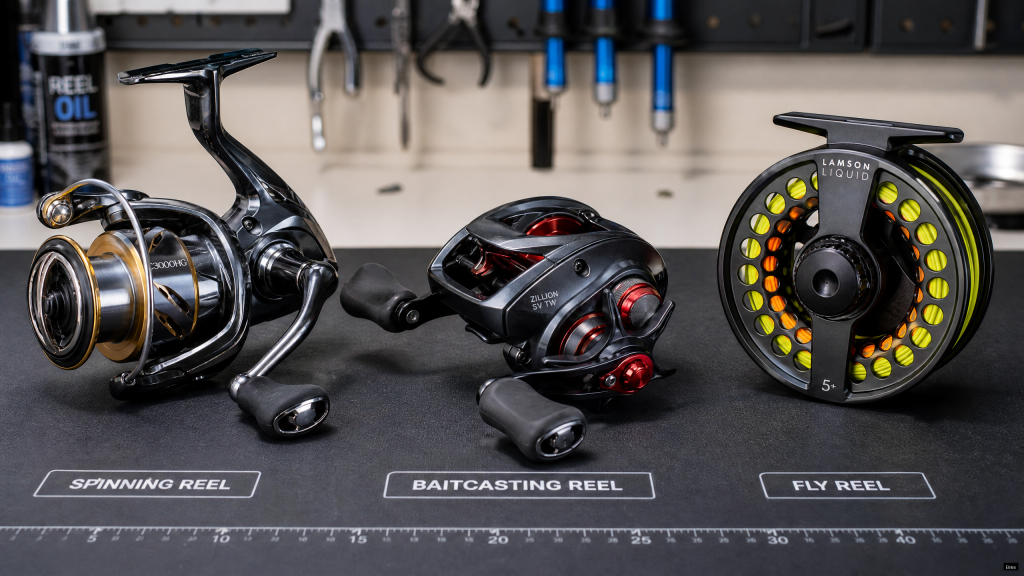
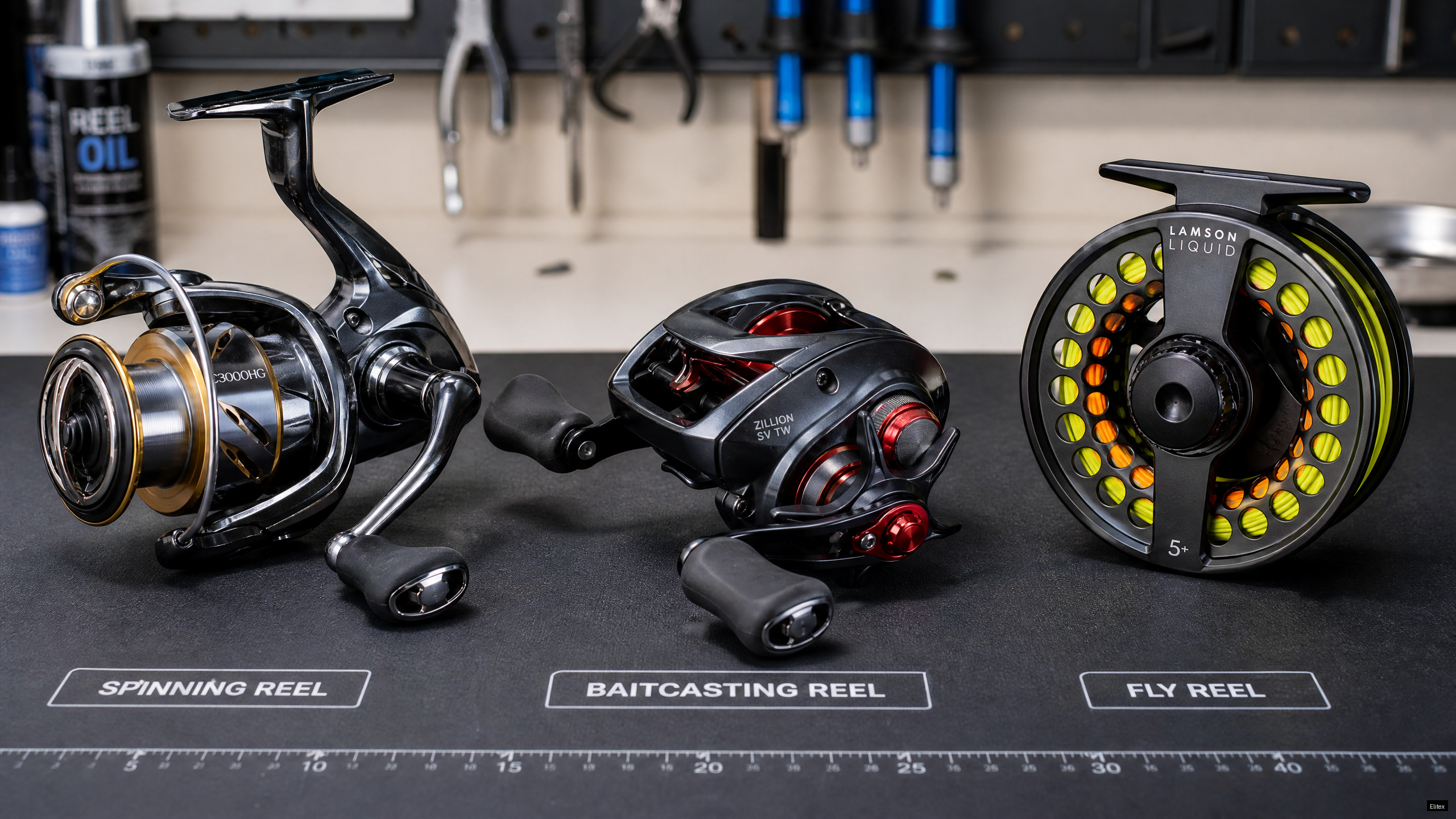
Three primary reel types dominate recreational fishing: spinning reels, baitcasting reels, and fly reels. Each operates on different mechanical principles, serves different fishing applications, and requires a different skill level to operate effectively. Understanding all three gives you the foundation to build a complete, versatile fishing setup.
Browse Elitex’s complete reel collection to find high-performance options across all three reel categories at competitive prices.
Spinning Reels: The Universal Beginner Platform
Spinning reels are the most widely used reel type in recreational fishing worldwide. They mount below the rod blank, with the spool oriented parallel to the rod. Line peels off the front of the spool during the cast, guided by a wire bail that opens to release line and closes to begin the retrieve.
The spinning reel’s open-face design and fixed spool make it highly resistant to backlash — the frustrating line tangle that occurs when the spool overruns the line during a cast. This forgiving characteristic makes spinning reels the universally recommended starting platform for beginner anglers.
Spinning reels excel with lighter lines from two to twenty pound test and lighter lures that lack sufficient weight to drive a baitcasting spool. They are the dominant choice for trout fishing, walleye fishing, bass fishing with finesse techniques, and most inshore saltwater fishing applications.
Key spinning reel specifications include gear ratio (which controls retrieve speed), bearing count (which affects smoothness), drag capacity (maximum pressure applied to the line), and spool size (which determines line capacity). Fishing Reels Guide Quality spinning reels feature front-mounted drag systems, stainless steel bail wire, and machined aluminum spools for optimal performance.
Baitcasting Reels: Precision Tools for Advanced Anglers
Baitcasting reels mount on top of the rod blank with the spool oriented perpendicular to the rod. Unlike spinning reels, the spool rotates during the cast, requiring the angler to control spool speed with thumb pressure to prevent backlash. This active control demands practice but unlocks a level of casting precision that spinning reels cannot match.
The learning curve for baitcasting reels is real. Most beginners experience backlash — commonly called a “bird’s nest” — during initial practice sessions. Modern baitcasters incorporate magnetic and centrifugal braking systems that assist spool speed control, significantly reducing backlash during the learning period.
Once mastered, baitcasting reels deliver superior line management for heavier lines from twelve to sixty-five pound braided or monofilament, larger and heavier lures, and high-precision casting accuracy in tight spaces. They are the professional standard for tournament bass fishing, musky fishing, and heavy-cover applications where casting accuracy is mission-critical.
As Wikipedia notes in its overview of fishing techniques, precision line control is fundamental to effective angling across diverse fishing environments. The baitcasting platform is the premier tool for achieving that control at advanced skill levels.
Fly Reels: Simplicity Serving Specialized Purpose
Fly reels operate on a fundamentally different principle than spinning or baitcasting reels. In fly fishing, the weight of the fly line itself carries the nearly weightless fly to the target — the opposite of conventional fishing where lure weight drives the cast. Fishing Reels Guide The fly reel serves primarily as a line storage device and Fishing Reels Guide drag system rather than an active casting instrument.
Traditional fly reels use a single-action design where one full rotation of the handle equals one rotation of the spool. Large-arbor fly reels have become the modern standard, featuring a wide spool diameter that reduces line memory, Fishing Reels Guide picks up line faster during the retrieve, and provides a smoother drag experience during fish runs.
Drag systems in quality fly reels use disc drag technology — similar in concept to disc brakes — to deliver smooth, consistent pressure during a fighting fish’s runs. A well-designed fly reel drag is critical when targeting powerful species like steelhead, salmon, and bonefish that make long, fast runs against resistance.
Fly reels are sized by the fly line weight they are designed to carry, from size two for small trout streams to size fourteen for large marlin and tarpon. Matching the reel size to the fly rod weight creates a balanced, properly weighted system that casts efficiently and fights fish effectively.
Reel Drag Systems: Understanding How They Work
The drag system is among the most important performance specifications on any fishing reel. The drag applies measured resistance to line leaving the spool, preventing a running fish from breaking the line while allowing it to take line freely enough to avoid hook pulls.
Spinning reel drags are typically located on the front of the spool (front-drag systems) or at the rear of the body (rear-drag systems). Front drag systems generally provide smoother, more powerful drag performance and are preferred for serious fishing applications. Rear drag systems offer convenient adjustment mid-fight but typically sacrifice maximum drag smoothness.
Baitcasting reel drags use a star-shaped wheel on the handle side of the reel or a lever drag mounted on the sideplate. Star drag systems are the most common and allow quick drag adjustment during a fish fight. Lever drag systems found on offshore reels offer precise pre-set drag settings for specific line-class applications.
Gear Ratios: Speed vs. Power
Gear ratio describes how many times the spool rotates for each complete turn of the handle. A 6.4:1 gear ratio means the spool completes 6.4 rotations per handle turn. Higher gear ratios retrieve line faster; lower Fishing Reels Guide gear ratios provide more cranking power for pulling large lures through resistance.
High-speed reels in the 7:1 to 8:1 range are preferred for techniques requiring fast line pickup such as topwater walking baits, slack-line hooksets, and burning reaction lures quickly through the water column. Low-speed reels in the 5:1 to 6:1 range provide more torque for deep-diving crankbaits that create significant water resistance and require sustained power to maintain depth and action.
Explore Elitex’s spinning and baitcasting reel lineup to find the ideal gear ratio for your specific fishing techniques.
Reel Materials and Construction Quality
Reel body and rotor materials significantly affect weight, durability, and corrosion resistance. Budget reels use graphite composite bodies that are lightweight and corrosion-resistant but flex under heavy load. Mid-range and premium reels use machined aluminum bodies and rotors that are rigid, durable, and provide consistent performance under pressure.
Ball bearing count affects smoothness throughout the retrieve and reel longevity. More bearings generally means smoother operation, but bearing quality matters more than quantity. A reel with five high-quality stainless steel bearings outperforms one with ten cheap bearings in smoothness, consistency, and longevity.
Maintenance: Keeping Your Reel Performing
Regular reel maintenance dramatically extends service life and maintains peak performance. Rinse spinning and baitcasting reels with fresh water after every saltwater or brackish water use. Apply Fishing Reels Guide reel oil to bail springs and line rollers on spinning reels. Apply reel grease to main gears annually. Loosen drag tension when storing reels to prevent drag washer compression.
Frequently Asked Questions About Fishing Reels
Q: What size spinning reel should a beginner start with?
A: A 2500 or 3000 size spinning reel is the ideal versatile starting size for most freshwater fishing applications. It balances line capacity, weight, and drag power for bass, trout, and general freshwater species.
Q: Are expensive reels worth the money?
A: Yes, for anglers who fish regularly. Premium reels deliver measurably better drag smoothness, lighter weight, superior corrosion resistance, and longer service life that justify their higher cost over years of use.
Conclusion: Choose the Right Reel for Your Fishing Goals
Understanding the mechanical differences between spinning, baitcasting, and fly reels positions you to make informed gear decisions matched to your specific fishing goals. Each reel type offers distinct advantages Fishing Reels Guide aligned to different techniques, species, and skill levels.
Whether you are setting up your first spinning outfit, mastering the baitcaster, or entering the world of fly fishing, Elitex has the right reel for your next fishing adventure. Invest in quality equipment matched to your technique and watch your fishing results improve immediately.
