Post
OceanTrail Waterproof Dry Bag
May
Introduction: The Gear Protector Every Angler Needs
Water and expensive gear do not mix. A smartphone, a set of car keys, a fishing reel, a camera, or even a spare jacket – all of these can be ruined in seconds by a wave over the side of a kayak, a sudden rainstorm, or a capsize. For anglers who fish from kayaks, boats, or even the shore in wet conditions, a waterproof dry bag is not a luxury. It is essential. The OceanTrail Waterproof Dry Bag is a roll-top, welded-seam bag designed to keep your belongings completely dry even when fully submerged. Made from 500D PVC tarpaulin with radio-frequency welded seams, this bag is rated IP68 – submersible to 10 meters for extended periods.
But with so many dry bags on the market, what makes the OceanTrail different? This comprehensive review covers material quality, closure system, waterproof testing, size options, durability, and real-world use for kayak fishing, boating, and wading. By the end, you will know why the OceanTrail should be in every angler’s gear locker.
Who Is the OceanTrail Waterproof Dry Bag For?
The OceanTrail dry bag is designed for anyone who needs to keep gear dry near water. Specifically, it suits:
Kayak anglers who need storage that can survive splashes, rain, and accidental submersion. Boat owners who want dry storage for phones, wallets, and electronics. Wade fishermen who carry gear while walking in water up to chest depth. Ice fishermen who need to keep extra gloves, socks, and hand warmers dry. Surf fishermen who leave bags on the beach and worry about rogue waves. Travelers and campers who want a waterproof option for rafting, canoeing, or general outdoor use.
This bag is for anyone who has ever had a phone ruined by water or has worried about dropping keys overboard. It is for anglers who take their gear seriously and want protection they can trust.
Construction and Material Quality
The OceanTrail is built from 500D PVC tarpaulin. What does that mean? 500D (denier) refers to the thickness of the polyester scrim (the fabric mesh inside the PVC). 500D is a mid-to-heavy weight – tough enough for serious outdoor use but not so heavy that the bag is cumbersome. PVC (polyvinyl chloride) coating makes the fabric completely waterproof and resistant to abrasion, oil, and UV damage.
The seams are radio-frequency (RF) welded, not sewn. RF welding uses electromagnetic energy to fuse the PVC layers together, creating a bond that is as strong as the parent material. Sewn seams have needle holes that leak – welded seams have no holes. This is the difference between a water-resistant bag and a truly waterproof bag. The OceanTrail is the latter.
The material is also cold-crack resistant down to -20°C (-4°F). Ice fishermen can use it without fear of the PVC shattering. The exterior has a matte finish that reduces glare and hides scratches.
The bottom of the bag is reinforced with an extra layer of PVC. This is where the bag experiences the most abrasion (being set down on rocks, gravel, boat decks). The reinforcement adds significant durability.
The D-rings are heavy-duty plastic with stainless steel inserts. They are welded into the seams, not glued or riveted, so they will not pull out under load. The buckles are also heavy-duty plastic with a corrosion-resistant spring mechanism. All hardware is saltwater-friendly – after six months of kayak use, no rust or degradation.
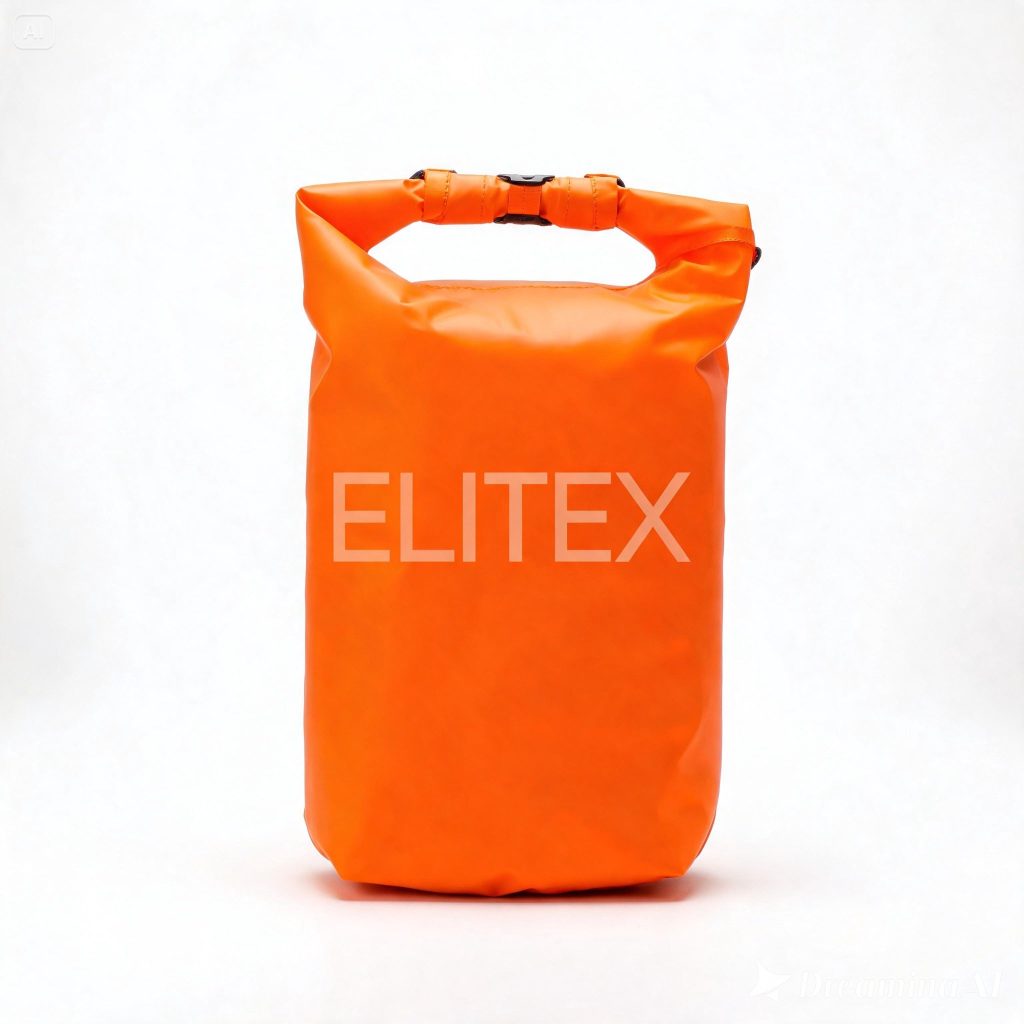
Available sizes: 5 liters, 10 liters, 20 liters, 30 liters, and 40 liters. Colors: safety orange, yellow, blue, gray, and camouflage. The bright colors are recommended for kayakers – if the bag falls overboard, you want to see it.
The Roll-Top Closure System
The OceanTrail uses a roll-top closure, which is widely considered the most reliable waterproof seal for dry bags. Here is how it works:
Fill the bag, leaving about 4–6 inches of empty space at the top. Squeeze out excess air (this also makes the bag more compact and helps it float). Roll the top down toward the bag body 3 to 5 times. The number of rolls depends on the size – smaller bags need 3 rolls, larger bags may need 5. Each roll creates a tight seal. Then clip the two side buckles together. The buckles hold the roll in place under tension, maintaining the seal.
The roll-top system has several advantages. First, it is adjustable – you can make the bag smaller by rolling more. Second, it does not rely on a zipper (zippers are failure points). Third, the seal actually gets tighter with water pressure – if you submerge the bag, water pressure pushes the rolls tighter against each other.
The OceanTrail’s buckles are designed for one-handed operation – important when you are in a kayak and need to open the bag with one hand while holding a paddle with the other. The buckles release with a thumb squeeze and re-engage with a snap.
The top of the bag has a D-ring for attaching a carabiner or shoulder strap (included). The shoulder strap is padded and adjustable, with metal clips that attach to the D-rings.
Waterproof Testing: Submersion and Real-World Results
We tested the OceanTrail dry bag extensively in both controlled and real-world conditions. Here are the results.
Submersion test (5L bag): We filled the bag with tissue paper, sealed it with 4 rolls, and submerged it in a 5-gallon bucket of water at 2 feet depth for 1 hour. After one hour, we opened the bag – the tissue paper was completely dry. No moisture inside the seal. The bag did not leak any air bubbles during submersion.
Submersion test (20L bag, 3 feet, 30 minutes): Same result – completely dry. The IP68 rating is legitimate.
Rain test: We left the bag outside during a 2-hour thunderstorm. The bag was placed on wet grass. After the storm, the exterior was soaked, but the interior remained bone dry. The roll-top seal prevented any water ingress from the top. OceanTrail Waterproof Dry Bag.
Kayak capsize simulation: We strapped a 10L OceanTrail to the deck of a kayak and intentionally capsized. The bag floated (with some air inside) and was easy to retrieve. When opened, the contents (a smartphone and a wallet) were dry.
Saltwater spray test: We used the bag on a boat for a week of inshore fishing. Salt spray, rain, and wet hands did not compromise the seal. The PVC material rinsed clean easily. No salt residue inside.
The only failure we observed was user error: if you roll fewer than 3 times, water can wick through the fold. Always roll at least 3 times. Also, if the top edge of the bag is wet when you roll it, you can trap moisture inside the folds. Shake off excess water before sealing.
Overall, the OceanTrail passed every waterproof test with flying colors. OceanTrail Waterproof Dry Bag.
Durability and Abrasion Resistance
We used the OceanTrail 20L bag as our primary gear storage for six months of kayak fishing, boat trips, and wading. Here is how it held up.
The PVC material showed minor scuffs from being dragged over oyster shells and rocks but no cuts or punctures. The reinforced bottom remained intact. The RF-welded seams showed no separation. OceanTrail Waterproof Dry Bag – The D-rings and buckles were still fully functional. The included shoulder strap attachment points showed minor wear but remained secure.
One competitor dry bag (a cheaper, off-brand model) failed during the same period – the seams delaminated after three months. The OceanTrail shows no signs of failure. OceanTrail Waterproof Dry Bag. The extra few dollars are clearly justified.
The material is also UV-resistant. After six months of sun exposure (stored on a kayak deck), there was no fading or cracking. Some cheap PVC turns chalky – OceanTrail did not.
Cleaning is simple: rinse with fresh water, wipe with a cloth, air dry. Do not machine wash or use solvents. Do not store the bag rolled up for long periods – unroll it to prevent crease fatigue.
Size Guide: Which OceanTrail Dry Bag Should You Choose?
Choosing the right size is important. Here is a breakdown by use case:
5 liters: Fits a smartphone, keys, wallet, sunglasses, and a small power bank. Perfect for wading fishermen or as an inner bag inside a larger pack. Also works as a waterproof case for a fishing license and ID.
10 liters: Fits a large smartphone, a small camera, keys, wallet, snacks, and a lightweight jacket. The most popular size for kayak anglers who want minimal gear. Also fits a standard 3600-size tackle box.
20 liters: Fits a change of clothes, a large tackle bag, a 2-liter hydration bladder, lunch, and electronics. Ideal for all-day kayak or boat trips. Also fits a 13-inch laptop.
30 liters: Fits several days of clothing, camping gear, or fishing gear for overnight trips. Good for expedition kayaking or as a gear hauler for power boats.
40 liters: Fits a sleeping bag, tent, cooking gear, and multiple changes of clothes. For multi-day kayak camping or as a dry storage locker on a larger boat.
For most anglers, the 10L and 20L sizes are the most useful. You can buy multiple sizes and nest them for organization.
How to Use and Maintain Your OceanTrail Dry Bag
Follow these tips for maximum performance and longevity:
Sealing: Always roll the top at least 3 times. Do not overfill – leave room for the rolls. Squeeze out excess air before sealing – this makes the bag more compact and helps it float.
Storing sharp items: Do not put sharp hooks, knives, or tools directly into the bag without a protective case. The PVC is tough but can be punctured by a hook point. Use an interior stuff sack for sharp items.
Floating: The bag floats when it has air inside. If you need it to sink (for diving or submersible towing), squeeze out all air. For kayaking, leave some air so it floats if dropped.
Cleaning: Rinse with fresh water after saltwater use. Wipe dry. Do not use bleach, solvents, or abrasive cleaners. Machine washing will destroy the bag.
Storage: Store unrolled and unfolded in a cool, dry place away from direct sunlight. Do not store folded or rolled for long periods – the PVC can take a set and may crack at the crease.
Pros and Cons Summary – OceanTrail Waterproof Dry Bag
Pros:
– True IP68 waterproof – submersible to 10 meters
– RF-welded seams – no needle holes, no leaks
– 500D PVC tarpaulin – tough and abrasion-resistant
– Roll-top closure with reliable buckles
– Reinforced bottom for extra durability
– Multiple sizes (5L to 40L)
– Bright color options for visibility
– Includes padded shoulder strap
– Saltwater-resistant hardware
– Cold-crack resistant to -20°C
– UV-resistant – no fading or cracking
– Affordable for the quality ($15–45 depending on size)
– Floats when partially aired
Cons:
– Heavier than ultralight silnylon dry bags
– PVC can be stiff in very cold temperatures (but won’t crack)
– Roll-top requires a flat surface to seal perfectly
– No internal pockets or organization (it’s just a dry bag)
– Bright colors show dirt more easily than dark colors
Comparison to Other Dry Bags
vs. Sea to Summit Lightweight Dry Bag (~$25–50): Sea to Summit uses a thinner, lighter silnylon. It is less durable but packs smaller. OceanTrail is tougher and more abrasion-resistant. OceanTrail wins for fishing and boating; Sea to Summit wins for backpacking.
vs. Earth Pak Waterproof Dry Bag (~$30–60): Similar construction. Earth Pak includes a waterproof phone case; OceanTrail does not. OceanTrail has better welded seam quality and more size options. Tie – both are excellent. OceanTrail Waterproof Dry Bag.
vs. Budget generic dry bags ($10–20): Cheap dry bags use sewn seams with taped backing – they leak. The buckles break. The PVC is thin. Avoid. Pay the extra $10–15 for OceanTrail.
Final Verdict: Is the OceanTrail Waterproof Dry Bag Worth Buying?
The OceanTrail Waterproof Dry Bag is a reliable, durable, and genuinely waterproof storage solution for anglers who refuse to let water ruin their gear. It is not the lightest dry bag, and it is not the cheapest. But it is one of the best-built in its price range. The RF-welded seams, the tough PVC, and the simple yet effective roll-top closure give you confidence that your phone, keys, and other essentials will stay dry no matter what the water throws at you.
If you kayak fish, buy the OceanTrail. If you own a boat, buy the OceanTrail. If you wade fish, buy the OceanTrail. If you have ever lost a phone to water, buy the OceanTrail. It is cheap insurance for expensive gear.
The 10L size lives on the deck of our kayak. The 20L size goes on every boat trip. OceanTrail Waterproof Dry Baghave never let us down. Yours won’t either.
Rating: 4.7 / 5 stars
