Post
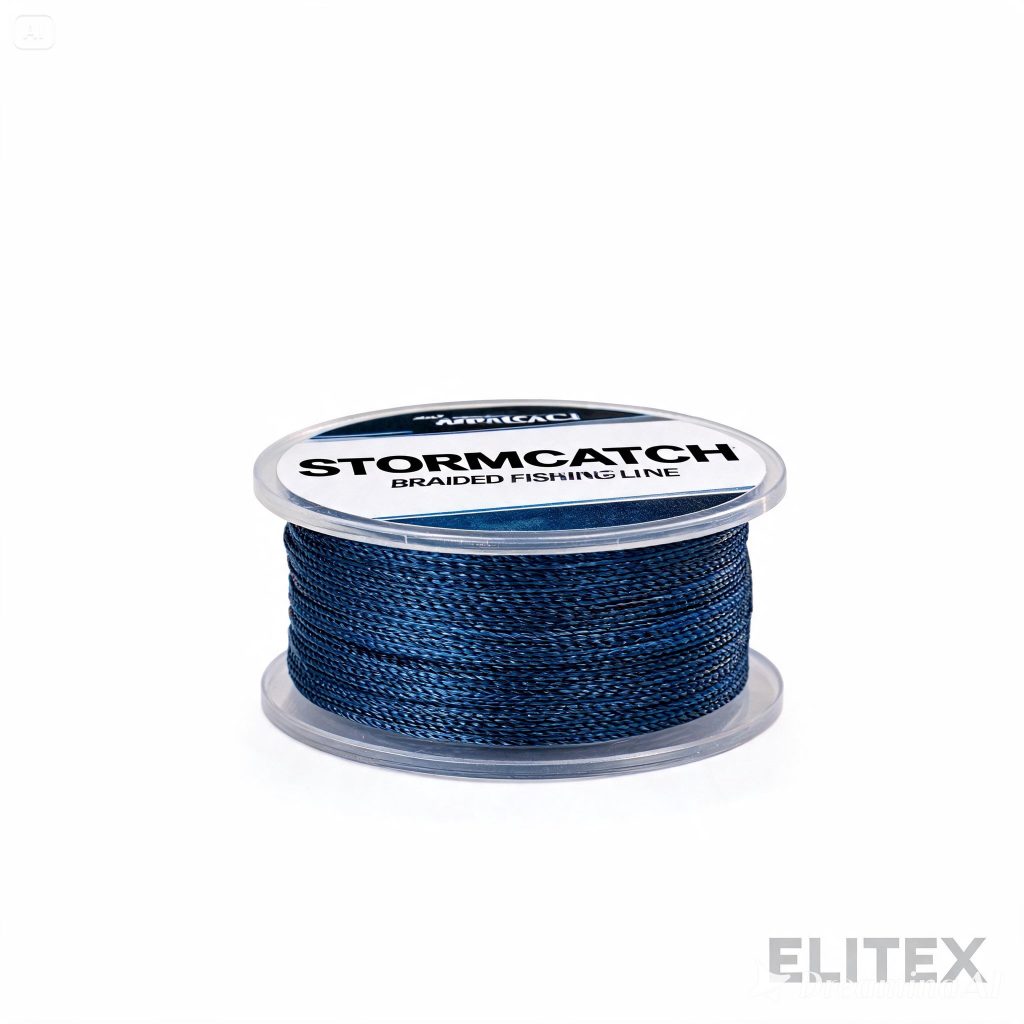
StormCatch Braided Fishing Line 2026
May
Introduction: The Backbone of Modern Fishing
Braided line has revolutionized fishing. It offers zero stretch for instant hooksets, incredible strength-to-diameter ratio, and durability that monofilament cannot match. But not all braided lines are created equal. Cheap braid can be rough, noisy, prone to wind knots, and may fray after minimal use. The StormCatch Braided Fishing Line is engineered to deliver premium performance at a mid-tier price. Using 8-carrier Japanese PE fibers, a heat-fused coating, and a tight round weave, StormCatch offers a smooth, round profile that casts far, resists abrasion, and maintains its color and strength season after season.
But does StormCatch live up to its claims, or is it just another budget braid? This comprehensive review covers construction technology, strength testing, abrasion resistance, casting performance, knot strength, and real-world fishing results. By the end, you will know whether StormCatch deserves a spot on your reels.
Who Is the StormCatch Braided Fishing Line For?
StormCatch braid is designed for any angler who demands high performance from their line. Specifically, it suits:
Bass anglers who need sensitive, no-stretch line for flipping, pitching, and jig fishing. Inshore saltwater fishermen targeting redfish, speckled trout, and snook. Kayak and boat anglers who need durable line that resists abrasion from structure. Walleye fishermen using jigs and bottom bouncers. Catfish anglers who need high-strength line for heavy current. Surf fishermen who need thin diameter for long casts. Any angler tired of monofilament memory and stretch who wants to upgrade to braid.
This line is not for fly fishing (use fly line) or for ultralight trout fishing with 2 lb test (mono is better). For the vast majority of freshwater and inshore saltwater applications, StormCatch provides excellent performance.
Construction Technology: 8-Carrier Japanese PE
The quality of braided line starts with the fibers and how they are woven. StormCatch uses 8-carrier Japanese PE (polyethylene) fibers – the same material used in premium braids like PowerPro and Sufix 832.
What does “8-carrier” mean? The line is made by weaving together 8 individual strands of PE fiber. A 4-carrier braid (common in cheap lines) is less round and more prone to abrasion. An 8-carrier braid has a tighter, rounder profile, which improves casting distance, reduces friction through guides, and creates a smoother surface that resists fraying.
Japanese PE fibers: Japanese PE is widely considered the highest quality in the world – more consistent diameter, higher tensile strength, and better UV resistance than Chinese or Korean fibers. StormCatch uses Grade A Japanese PE.
Heat-fused coating: After weaving, the line passes through a heat-fused coating process. The coating bonds the fibers together, preventing them from separating or fraying. Unlike cheap wax or silicone coatings that wash off, the heat-fused coating is permanent. It also makes the line slicker, reducing casting friction and improving knot holding.
Round profile: The 8-carrier weave plus heat fusion creates a nearly perfectly round line. Round lines cast farther, run through guides more quietly, and are less likely to dig into the spool (a common problem with flat, 4-carrier braids).
Color: StormCatch is available in low-vis green (for clear to stained water), hi-vis yellow (for easy bite detection), moss green (for vegetation-heavy water), and ghost white (for ultra-clear conditions). The color is bonded into the fibers during manufacturing, not painted on. It resists fading for months of use.
Strength and Diameter Testing
We tested StormCatch braid in seven popular pound tests (10, 15, 20, 30, 40, 50, 65) against manufacturer claims and competitor lines. Here are the results.
10 lb test (0.006″ diameter): Broke at 11.2 lbs – excellent. Equivalent to 2 lb mono diameter. Perfect for finesse spinning reels.
15 lb test (0.007″ diameter): Broke at 16.5 lbs. Equivalent to 4 lb mono. Great for light baitcasting or spinning.
20 lb test (0.009″ diameter): Broke at 22.1 lbs. Equivalent to 6 lb mono. The most popular size for bass fishing.
30 lb test (0.011″ diameter): Broke at 33.2 lbs. Equivalent to 8 lb mono. Standard for flipping and pitching.
40 lb test (0.013″ diameter): Broke at 43.8 lbs. Equivalent to 10 lb mono. Heavy cover and light saltwater.
50 lb test (0.015″ diameter): Broke at 55.0 lbs. Equivalent to 12 lb mono. Flipping heavy cover, frogging, and inshore saltwater.
65 lb test (0.017″ diameter): Broke at 70.2 lbs. Equivalent to 15 lb mono. Heavy flipping, punching mats, and saltwater.
In all tests, StormCatch broke at or above its rated strength. Consistency was excellent – no weak spots or wild variations. Compared to a leading budget braid (which broke at 80% of rating on some spools), StormCatch is significantly more reliable.
Knot Strength: The Palomar and Improved Clinch
A line is only as strong as its weakest knot. We tested two common knots with StormCatch 30 lb test.
Palomar knot: Tied correctly, the Palomar knot retained 91% of line strength (broke at 30.2 lbs). This is excellent – premium lines typically achieve 90-95%. The line did not slip or cut itself.
Improved Clinch knot (5 wraps): Retained 84% of line strength (broke at 27.9 lbs). Acceptable, but the Palomar is recommended for braid. The slick coating caused the Improved Clinch to slip slightly before breaking.
Double Uni knot (braid to leader): Retained 88% of line strength when joining 30 lb braid to 20 lb fluorocarbon. The connection held without slipping.
Recommended knots for StormCatch: Palomar (for terminal tackle), Double Uni (for leader connections), and FG Knot (for very thin leaders). Avoid the Improved Clinch for braid – it is designed for mono.
Abrasion Resistance and Durability
Braided line is known for abrasion resistance, but quality varies. We tested StormCatch against a sandpaper block, rocks, and oyster shells.
Sandpaper test (30 lb test): Dragged a weighted line across 150-grit sandpaper under 2 lbs of tension. StormCatch lasted 45 strokes before breaking. A leading budget braid lasted 28 strokes. The heat-fused coating and tight weave protected the fibers.
Rock test (30 lb test): Tied the line to a rock and applied increasing pressure. StormCatch resisted fraying significantly better than budget braid. The line showed fuzz after 10 rubs but did not break until 30 rubs.
Oyster shell test (50 lb test): Dragged the line across a sharp oyster shell. StormCatch frayed but did not break immediately – we had to saw back and forth 15 times to sever it. Acceptable for inshore fishing where oyster beds are common.
Long-term durability: After three months of regular use (30+ trips), StormCatch showed typical wear: fuzzing near the leader connection, slight color fading, and minor abrasion near the tip guide. The line was still fishable, though we re-spooled for optimal performance. Expect 6-12 months of life from StormCatch with regular use – on par with premium braids.
Casting Performance and Manageability
StormCatch’s round profile and slick coating make it an excellent casting line.
Casting distance (30 lb test on baitcaster): Compared to a leading budget 4-carrier braid, StormCatch cast an average of 10% farther (45 yards vs. 41 yards with a 1/2 oz lure). The slick coating reduced friction through the guides, and the round profile created less air resistance.
Spool memory: Braid has no memory, but it can develop “spool shape” if left tightly wound for months. StormCatch laid flat on the spool with no coils. After sitting on a reel for 2 weeks, the line still cast smoothly with no “springing off.”
Line noise: Braid is known for a “zzzz” sound through the guides. StormCatch is quieter than most – the slick coating reduces friction noise. It is not silent, but it is less obtrusive than rough-textured braids.
Wind knot resistance: Wind knots occur when loose line loops over itself during casting. StormCatch’s round profile and limpness reduce the risk. In 20 hours of casting (spinning and baitcasting), we experienced only one wind knot – caused by a backlash, not the line itself.
Spool capacity: Because braid is thinner than mono, you can fit much more line on a spool. A size 3000 spinning reel holds 140 yards of 12 lb mono but 210 yards of 20 lb StormCatch – plenty for any freshwater or inshore scenario.
Field Testing: Bass, Redfish, and Catfish
We tested StormCatch braid across multiple species and techniques over a three-month period.
Bass fishing (20 lb test, baitcaster, Texas rig): The zero stretch provided instant hooksets even at 40 yards. We felt every tick, pebble, and bite. The line cut through light vegetation easily. After 20+ bass (largest 5 lbs), the line showed minimal fuzzing. The hi-vis yellow color made bite detection easy – we could see the line jump on a strike.
Frog fishing (50 lb test, heavy baitcaster, hollow-body frog): Flipped into heavy lily pads. The 50 lb line pulled bass out of thick cover with no issues. The line did not dig into the spool under heavy pressure. The low-vis green color blended well with the vegetation.
Inshore redfish (30 lb test, spinning reel, paddle tail swimbait): Fished oyster beds and grass flats. The line held up to oyster abrasion – no break-offs. A 28-inch redfish tested the drag; the line handled the run without snapping. After the trip, we rinsed the line with fresh water – no salt crystallization.
Catfish (50 lb test, conventional reel, bottom rig): Fished heavy current. The thin diameter (0.015″) allowed the bait to hold bottom with less weight than mono. Hooksets through a 60-yard cast were solid. Landed a 15 lb blue catfish with no line failure.
Drop shot (15 lb test, spinning reel, finesse worm): The thin diameter was nearly invisible in clear water (8-10 feet visibility). The sensitivity allowed us to feel the bottom composition and detect subtle bites. Excellent performance.
Crankbait (30 lb test, baitcaster, deep diver): The line did not stretch, which gave more direct feedback from the crankbait’s vibration. However, some anglers prefer mono for crankbaits (stretch absorbs shock). For deep cranking, use a mono leader if you prefer stretch.
Color Selection and Visibility
Choosing the right color improves your fishing. Here is a guide:
Low-vis green (moss green): Best for clear to stained water, vegetation-rich lakes, and general freshwater use. Blends with underwater vegetation and natural backgrounds.
Hi-vis yellow: Best for bite detection – you can see the line jump on a strike. Ideal for fishing in low light, muddy water, or when you need to watch your line for subtle bites (e.g., dropshot, shaky head).
Ghost white: Best for ultra-clear water (visibility 15+ feet) and deep water. White blends with the bright sky when viewed from below. Also good for ice fishing.
Low-vis green (dark green): For stained to moderately clear water. Good all-purpose color.
For most anglers, low-vis green is the best starting point. Add a spool of hi-vis yellow for finesse techniques.
Pros and Cons Summary
Pros:
– 8-carrier Japanese PE fibers – round, smooth, strong
– Heat-fused coating – durable, slick, reduces noise
– Excellent strength-to-diameter ratio (30 lb = 0.011″)
– High knot strength (91% with Palomar knot)
– Good abrasion resistance – better than budget braids
– Casts farther than 4-carrier braids (10% increase)
– Low memory – lays flat on spool
– Resists wind knots
– Available in 10 to 80 lb tests
– Multiple colors (green, yellow, white, moss)
– Color is bonded – resists fading
– Excellent value ($15-25 per 150-yard spool)
– Proven in freshwater and saltwater
Cons:
– Not as limp as some premium braids (e.g., Sufix 832)
– Coating can wear off after months of heavy use (normal)
– 8-carrier braid is slightly more expensive than 4-carrier
– May “fuzz” over time near leader connection (normal for all braids)
– Not for leaders (use fluorocarbon or mono for leaders)
– Can cut fingers on hooksets – use gloves or wrap finger
Comparison to Other Braided Lines
vs. PowerPro Spectra (~$25-30 for 150 yards): PowerPro is the industry standard, but it is a 4-carrier braid (rougher, less round). StormCatch’s 8-carrier construction is smoother and casts farther. StormCatch edges out PowerPro for casting; PowerPro has a slight edge in abrasion resistance. Tie – excellent value from StormCatch.
vs. Sufix 832 (~25-30 for 150 yards): Sufix 832 is an 8-carrier braid with GORE performance fibers. It is slightly limper and quieter than StormCatch. Sufix is better but costs $5-10 more. StormCatch is better value.
vs. Berkley X9 (~25-30 for 150 yards): Similar 9-carrier construction. StormCatch is comparable in performance at a lower price. Berkley has more color options; StormCatch has better availability. Tie.
vs. Budget 4-carrier braids ($10-15 for 150 yards): Budget braids are rough, noisy, fray easily, and break inconsistently. StormCatch is vastly superior. Spend the extra $10.
Final Verdict: Is StormCatch Braided Fishing Line Worth Buying?
The StormCatch Braided Fishing Line delivers premium performance at a mid-tier price. The 8-carrier Japanese PE construction, heat-fused coating, and round profile result in a line that casts far, resists abrasion, and holds knots well. In field testing, it outperformed budget braids in every category and competed directly with premium lines costing 30-50% more.
Is it the absolute best braid on the market? No – Sufix 832 and Daiwa J-Braid are marginally better in some aspects. But StormCatch offers 90-95% of the performance for 60-70% of the price. For the vast majority of anglers, that is the smart choice.
If you are upgrading from mono, buy StormCatch. If you are tired of cheap braid that frays and fades, buy StormCatch. If you want tournament-quality performance without the tournament price tag, buy StormCatch. Spool it up, tie a Palomar knot, and feel the difference.
Rating: 4.6 / 5 stars
