Post
Essential Fishing Tackle Box Organization Tips
May
Essential Fishing Tackle Box Organization Tips
Introduction: Why Tackle Organization Matters
A chaotic tackle box is more than an inconvenience — it actively costs you fishing time, lost lures, and missed opportunities. Every minute spent digging through tangled hooks and loose weights on the water is time not spent fishing. A thoughtfully organized tackle system is a direct investment in fishing effectiveness and enjoyment.
Professional anglers treat their tackle organization with the same seriousness they apply to technique development. Their systems allow them to locate any lure or component within seconds, adapt to changing conditions without delay, and maintain a complete inventory of what they have and what needs replacement. These same organizational principles are accessible to every angler regardless of experience level or tackle budget.
Shop complete tackle storage solutions at Elitex to find tackle boxes, utility trays, and storage systems for every fishing setup.
Choosing the Right Tackle Storage System
The first organizational decision is choosing the right storage platform. Tackle storage has evolved well beyond the traditional single compartment tackle box. Modern systems range from modular utility tray systems to backpack-style soft tackle bags, hard-sided tackle stations, and boat-mounted storage systems.
For shore fishing and hiking to remote spots, a soft tackle backpack with multiple exterior pockets and a utility tray storage system inside offers the best combination of capacity and mobility. For boat fishing with a tackle box organization dedicated fishing station, a larger hard-sided tackle station with multiple drawers and tray slots allows comprehensive organization without size constraints.
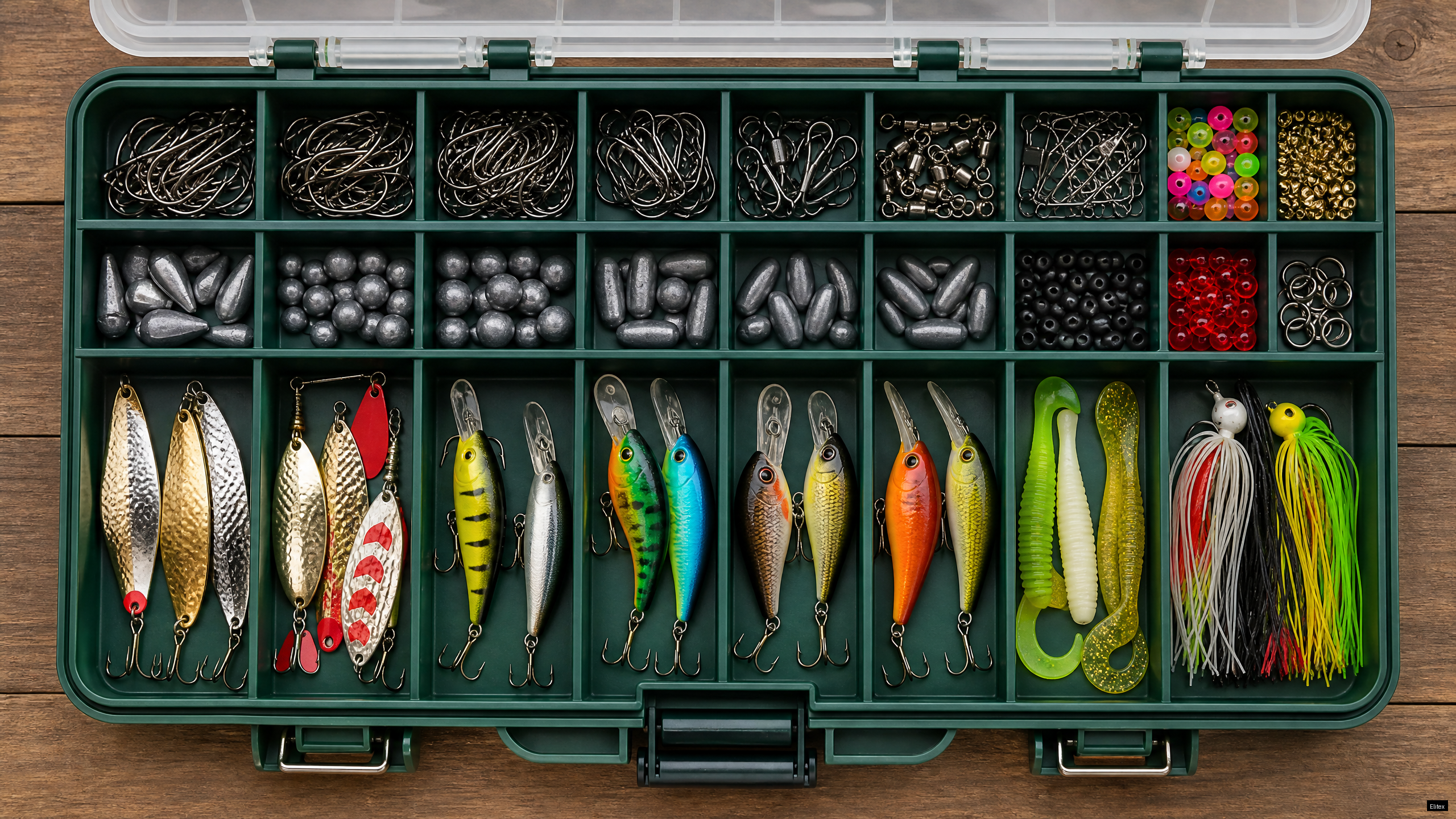
The modular utility tray approach — standardized plastic trays with adjustable dividers that stack and interchange — has become the dominant organizational system for tackle box organization serious anglers. These trays allow complete customization of compartment sizes for different tackle types, stack efficiently in bags and boxes, and are inexpensive to replace or expand.
Organizing by Technique, Not by Lure Type
The most effective organizational principle for active fishing is organizing by technique rather than by lure category. Technique-based organization means grouping together everything you need for a specific fishing method — lures, rigging components, weights, and terminal tackle — so that switching techniques requires accessing only one tray rather than hunting across multiple boxes.
A technique-based system might include a dedicated tray for finesse fishing containing drop shot weights, drop shot hooks, small soft plastics, and a split ring tool. A separate tray for flipping and punching contains heavier sinkers, wide-gap hooks, creature baits, and tungsten weights. A crankbait tray holds a curated selection of shallow, medium, and deep runners organized by color family.
As experienced fishing guides consistently emphasize, the ability to adapt quickly to changing fish behavior is a defining characteristic of successful anglers. A technique-based organization system supports that adaptability directly.
Hooks: Sorting and Storing the Right Way
Hooks represent one of the most challenging organizational problems in the tackle box due to their variety of styles, sizes, and tendency to interlock when mixed together. The most effective hook storage approaches separate hooks by style and size into small labeled compartments using individual hook storage packets or compartmentalized boxes with clearly labeled dividers.
Keep a dedicated hook assortment box containing a complete range of commonly used sizes in each hook style you regularly fish: offset wide-gap hooks in sizes one through five-O, treble hooks in sizes six through two, circle hooks in sizes one through four-O, and jig heads in quarter ounce through one ounce. This assortment box serves as a replenishment supply while main technique trays hold hooks pre-rigged and ready for immediate use.
Check hooks regularly for rust, corrosion, and point integrity. A dull hook is a fish you will lose. Replace hooks at the first sign of rust and sharpen dull points with a hook file or replace them entirely. Quality hooks are inexpensive insurance against lost fish.
Weights and Sinkers: Organization by Weight Class
Weights and sinkers are best organized by weight class in labeled compartments. Group bullet weights together from one-sixteenth ounce through one ounce in quarter-ounce increments. Keep split shot in separate compartments by size. Store drop shot weights, nail weights, and specialized sinkers in dedicated sections clearly labeled by weight and style.
Tungsten weights have become standard for premium fishing applications due to their smaller diameter, better sensitivity transmission, and harder material compared to lead. Tungsten’s higher cost makes waste through disorganization even more expensive — a well-organized weight system prevents losing expensive tungsten weights in the jumble of a disorganized tackle bag.
Find quality weights and sinker assortments at Elitex to keep your rigging system fully stocked and ready for any application.
Lure Organization: Color, Size, and Application
Hard lures including crankbaits, jerkbaits, topwater lures, and spinners benefit from individual storage to prevent paint damage from contact between lures. Individual lure wraps or dedicated lure trays with molded lure storage slots protect finish quality and hook point sharpness during transport.
Organize hard lures within a dedicated box by depth range and color family. Group shallow runners together, medium divers together, and deep runners together. Within each depth category, organize by color — natural shad colors in one section, reaction colors in another, crawfish patterns in a third. This arrangement allows rapid color and depth selection as conditions change.
Soft plastic baits present the challenge of heat sensitivity and off-gassing that can damage other plastics they contact. Store soft plastics in their original resealable bags organized by style and size, grouped together in a dedicated soft plastic bag or tray separate from hard baits and terminal tackle.
Terminal Tackle: The Small Items That Matter
Terminal tackle — swivels, snaps, split rings, beads, bobbers, and floats — gets lost most easily when disorganized. A dedicated small parts tray with secure, individually labeled compartments for each component type prevents this loss and makes terminal tackle immediately accessible when rigging under time pressure on the water.
Keep a complete terminal tackle assortment organized and stocked so that you can rig any presentation without leaving the water to search for components. The time savings across a full fishing season from having well-organized terminal tackle adds up to hours of additional fishing time.
Seasonal Tackle Rotation
Active tackle organization means rotating seasonal tackle in and out of your primary fishing bag to keep the system lean and current. Spring prespawn patterns call for different lures than summer tackle box organization deep water patterns. Carrying all your tackle all season creates unnecessary weight and clutter that slows you down.
At the beginning of each season, review your tackle system and move lures relevant to upcoming patterns into primary trays. Store off-season lures in a separate organized storage box. This rotation keeps your on-water system compact, current, and optimized for the patterns you are actively fishing.
Conclusion: Organization Is a Fishing Skill
Tackle box organization is a legitimate fishing skill that directly contributes to water time efficiency and fishing success. An angler who can locate any lure or component within seconds and switch techniques instantly without fumbling through disorganized gear has a genuine advantage over those who cannot.
Invest time in developing and tackle box organizationmaintaining a functional tackle organization system. The returns in efficiency, reduced frustration, and improved fishing results are immediate and lasting. Browse Elitex’s complete tackle storage lineup and build a system that serves every fishing outing at its best.
