Post
Best Fishing Lines for Different Water Conditions
May
Best Fishing Lines for Different Water Conditions
Introduction: Why Fishing Line Choice Matters
Fishing line is the most overlooked component in most anglers’ gear setups, yet it directly affects every aspect of fishing performance. Line selection influences casting distance, bait presentation, bite detection, hookset efficiency, and your ability to land fish once hooked. Choosing the wrong line for prevailing water conditions quietly undermines your fishing success even when everything else is optimized.
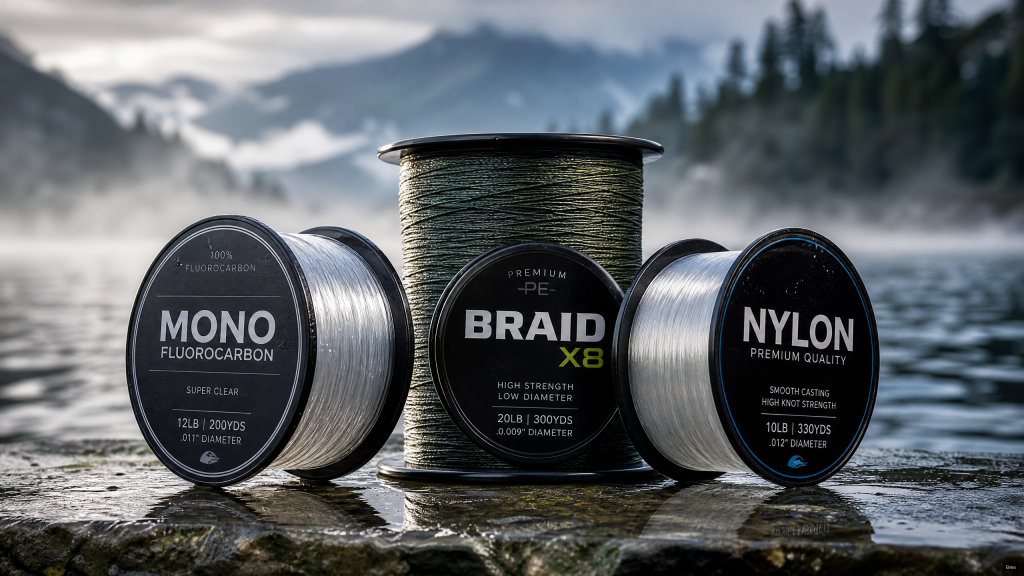
Three main line types dominate recreational fishing: monofilament, fluorocarbon, and braided line. Each has a distinct set of physical properties that make it ideal for certain conditions and techniques while creating disadvantages in others. Understanding these properties in the context of actual water conditions gives you a meaningful framework for every line purchase decision.
Shop the complete fishing line selection at Elitex to find premium options across all three line types at competitive prices.
Monofilament Line: The Versatile All-Rounder
Monofilament is the original modern fishing line and still the most widely used line type globally. Manufactured from a single extruded strand of nylon, monofilament combines manageable stretch, moderate visibility, and exceptional knot strength into an affordable package that performs across a wide range of fishing applications.
Monofilament’s inherent stretch — typically around twenty-five to thirty percent — acts as a natural shock absorber during fish fights, reducing the chance of hook pulls and sudden line breaks. This forgiving stretch makes mono the preferred choice for treble hook applications including crankbaits, topwater lures, and trolling, where instant strikes from fast-moving fish generate sharp shock loads.
In murky or stained water conditions where visibility is low, monofilament’s slight visibility is a non-issue. Brown, green, and clear monofilament options all blend adequately into low-visibility water environments where fish cannot examine line closely before striking. Monofilament also floats naturally, making it the default choice for topwater presentations where line sinking would interfere with lure action.
Monofilament’s primary weaknesses are UV degradation over time and memory — the tendency to hold coil shapes after being stored on a reel spool. Always replace monofilament at least once per season for best performance.
Fluorocarbon Line: The Clear Water Specialist
Fluorocarbon line’s defining characteristic is its refractive index, which is nearly identical to that of water. In practical terms, fluorocarbon becomes nearly invisible underwater — a critical advantage in clear water environments where fish have a clear view of anything attached to the bait or lure.
Clear lakes, spring-fed rivers, gin-clear tidal flats, and pressured fishing spots where fish have become line-shy are the environments where fluorocarbon delivers its greatest advantage. As fishing science consistently demonstrates, line visibility is a legitimate strike deterrent in clear water, and fluorocarbon directly addresses this problem.
Fluorocarbon also sinks faster than monofilament, which is advantageous for bottom-contact presentations like drop shots, Carolina rigs, and jig fishing where keeping the bait close to the bottom is the objective. Its low stretch relative to monofilament improves bite detection and hookset efficiency — transmitted vibration travels more directly through the line to the rod.
Pure fluorocarbon is denser, stiffer, and more expensive than monofilament, which creates some handling challenges. It is less castable with ultralight setups and requires careful knot selection to avoid the line slipping through knots under pressure. Fluorocarbon-coated monofilament offers a middle ground but lacks the full invisibility benefit of 100% fluorocarbon.
Braided Line: Strength and Sensitivity in Every Condition
Braided fishing line — woven from multiple strands of synthetic fiber including Spectra, Dyneema, and similar materials — represents the performance extreme of modern fishing line technology. Braid has near-zero stretch, exceptional strength relative to diameter, outstanding abrasion resistance, and an indefinite lifespan compared to nylon-based lines.
The near-zero stretch of braided line transmits every vibration, tap, and tick directly from the lure to the rod and angler’s hand. This superior sensitivity makes braid the premier choice for bottom-contact presentations including jigs, finesse techniques, and deep-water fishing where detecting subtle strikes through water column depth is the primary challenge.
Braid’s thin diameter relative to its strength allows spools to hold far more line than equivalent-strength monofilament or fluorocarbon — an important advantage for fishing deep water or requiring long casts. A reel loaded with thirty-pound braid might hold four hundred yards of line; the same reel with equivalent-diameter twenty-pound mono might hold one hundred fifty yards.
Matching Line Type to Water Clarity
Water clarity is the primary environmental variable that should drive line selection. Clear water demands low-visibility lines; murky or stained water allows more line color flexibility without affecting strike rates.
In clear water — defined as visibility greater than three feet — fluorocarbon line provides the greatest strike rate advantage. If fishing with braid in clear water, attach a six to twelve inch fluorocarbon leader at the terminal end to maintain the low-visibility benefit where fish examine the bait most closely.
In stained or murky water with visibility under two feet, monofilament and braid both perform well. The line visibility advantage of fluorocarbon is largely negated in these conditions, making the stretch and topwater advantages of mono or the sensitivity advantages of braid more relevant selection criteria.
Explore Elitex’s complete fishing line range to find the ideal line for your most frequent water conditions.
Matching Line to Water Depth
Water depth affects line selection through the physics of sensitivity and bait control. In shallow water under ten feet, any line type performs adequately because the short line distance maintains reasonable sensitivity even with stretchy monofilament.
In deep water fishing from thirty feet to one hundred feet or more, braided line’s near-zero stretch becomes critical. Monofilament with thirty percent stretch over sixty feet of line creates eighteen feet of stretch between the rod tip and the lure — making bite detection and strong hooksets nearly impossible. Braid eliminates this stretch problem, making it the standard choice for deep jigging, drop-shotting, and vertical presentations.
Line Weight Selection: Balancing Strength and Presentation
Line weight selection involves balancing fish-fighting strength against presentation subtlety. Heavier lines are more visible and affect the action of lightweight lures; lighter lines cast farther, present lures more naturally, but break more easily under pressure.
Match line weight to the expected size of target fish and the cover density in your fishing environment. Light six to ten pound test lines are appropriate for small panfish and trout in open water. Medium twelve to twenty pound lines cover bass, walleye, and pike fishing in moderate cover. Heavy thirty to sixty-five pound braid is the standard for heavy cover bass fishing, musky, and offshore saltwater applications.
Leader Materials: When to Use Them
Leaders are short lengths of line attached between the main line and the hook or lure. They allow you to run high-performance main line while optimizing terminal end properties separately. The most common leader applications include fluorocarbon leaders on braided main line for clear water stealth, wire leaders for toothy fish species like pike and musky, and shock leaders for surf casting where heavy weight impact loads exceed main line capacity.
Conclusion: Line Selection Is a Performance Decision
Fishing line selection has a measurable impact on best fishing lines fishing success that most anglers underestimate. Matching line type to water clarity, depth, target species, and technique is a straightforward framework that immediately improves strike rates, bite detection, and fish landing percentages.
Invest in quality line matched to your conditions, replace it regularly, and pay attention to the difference it makes in your fishing results. Find premium fishing lines for every condition at Elitex and give your setup the foundation it deserves.
